





















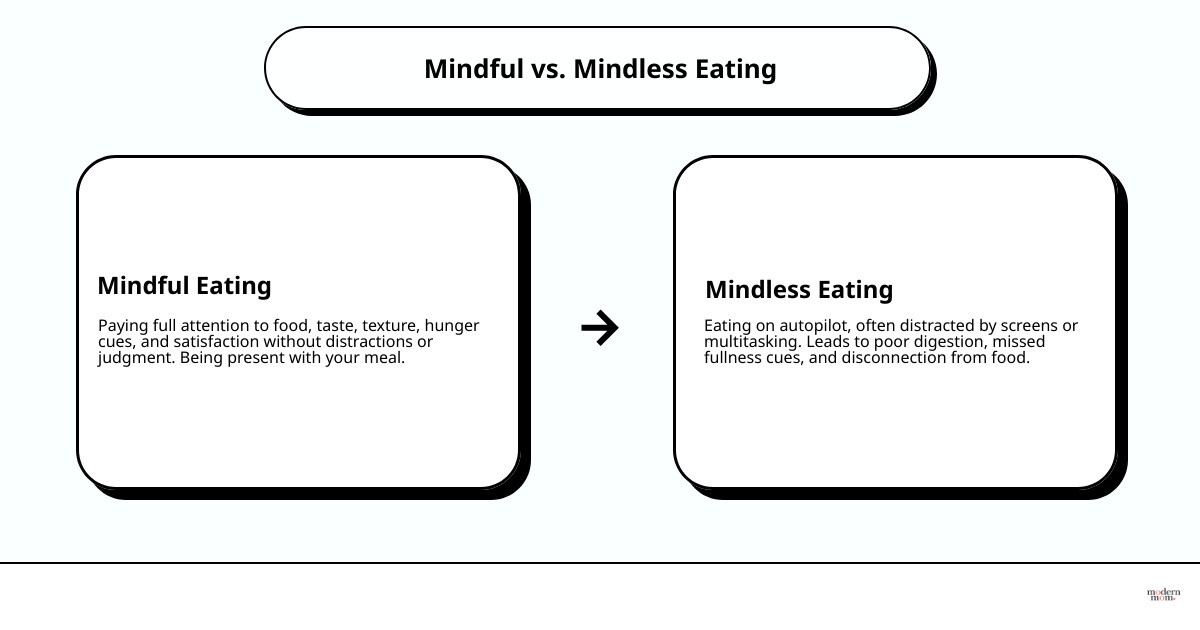
Mindful eating is the art of fully engaging in the eating experience by focusing on the taste and texture of food, recognizing hunger cues, and savoring satisfaction without distractions. This practice promotes slowly consuming meals, tuning into all your senses, differentiating emotional hunger from physical hunger, and avoiding simultaneous multitasking with screens or other distractions.
Essential Steps to Mindful Eating:
- Slow down – Chew your food thoughtfully and try to stretch your meals to last at least 20 minutes.
- Eliminate distractions – Turn off screens and set aside time to sit down for your meals.
- Listen to your body – Learn to stop eating when you are around 80% full.
- Engage your senses – Pay attention to the colors, smells, textures, and flavors of your food.
- Self-questioning – Regularly ask yourself, “Am I eating out of physical hunger or for other reasons?”
- Start small – Begin with one meal a day or even just focus on one mindful bite.
Sound daunting? Many people find themselves eating quickly, distracted by work emails or enjoying leftovers standing up. In reality, the average individual spends only about 1 hour and 12 minutes eating each day, contrasting sharply with the 2½ to 3 hours spent in front of screens. Alarmingly, 66% of people often opt for dinner in front of the television.
This perpetual multitasking can impair digestion by as much as 30% to 40%, leading to discomfort and a lack of awareness regarding feelings of fullness. It’s no wonder that many feel disconnected from both their food and their bodies.
Mindful eating is not about perfection; it’s a relaxed approach to reconnecting with the act of nourishing yourself. It’s more about being present rather than perfect—an essential truth for every busy mom navigating family and work life.
While juggling various responsibilities, adopting sustainable mindful eating habits may seem overwhelming, but it’s not about complicating your schedule; it’s about adding awareness to what you are already doing. Below is a guide offering practical, realistic methods for eating smarter, even on your most hectic days.
Helpful Resources for Mindful Eating:
What Is Mindful Eating (And What It’s Not)
At its core, mindful eating is about genuinely paying attention to the act of eating. This practice stems from broader mindfulness principles, defined by Jon Kabat-Zinn, a key figure in the field, as “the awareness that arises when we pay attention on purpose, in the present moment, and without judgment.” Originally rooted in Zen Buddhism, mindful eating has emerged as a transformative way to enhance our relationship with food.
Unlike conventional dieting that imposes rigid categories regarding what, when, and how much to eat, mindful eating focuses on the personal experience of eating. Although weight loss can sometimes be a beneficial outcome, the primary emphasis is on tuning into senses and fostering a connection with meals rather than restrictions or calorie counting. Resources from organizations like The Center for Mindful Eating can provide further insights for anyone looking to delve deeper into this practice.
Mindful vs. Mindless Eating
Understanding mindful eating habits becomes clearer when we recognize what they are not. Many of us fall into the mindless eating habit loop, where attention is directed elsewhere during meals. This often results in overeating and general dissatisfaction.
| Aspect | Mindful Eating | Mindless Eating |
|---|---|---|
| Approach | Intentional, conscious, present | Automatic, habitual, distracted |
| Awareness | Fully engaged with food and body signals | Detached, unaware of the eating process |
| Pace | Slow, deliberate, savoring | Fast, rushed, often gulping |
| Hunger Cues | Attuned to internal hunger and fullness | Driven by external triggers, emotions, or customary behaviors |
| Distractions | Minimal to none (e.g., no screens, work) | Frequent distractions (e.g., TV, phone, work) |
| Satisfaction | High, leading to contentment | Low, often resulting in overeating |
With 66% of Americans regularly opting to eat dinner in front of a television screen, this practice not only impairs digestion by up to 40% but also inhibits the brain’s ability to recognize fullness, leading individuals to consume more than needed. Engaging in mindful eating restores this important connection.
The Core Principles of Mindful Eating
Adopting mindful eating habits involves embracing foundational attitudes, as outlined by mindfulness specialists. These principles guide us in relating to food—and ourselves—with kindness and awareness:
- Non-judging: Observing thoughts and feelings about food without labeling them aids in releasing guilt.
- Patience: Recognizing that habit changes require time, without expecting immediate results.
- Beginner’s Mind: Approaching each meal with curiosity, akin to experiencing it for the first time, enables the discovery of subtle flavors and textures.
- Trust: Learning to trust one’s body regarding hunger and fullness, beyond external diet rules.
- Non-striving: Focusing on the act of mindful eating itself, rather than aiming for specific outcomes.
- Acceptance: Acknowledging current eating patterns and emotional responses with honesty.
- Letting Go: Releasing expectations and past judgments to fully immerse in the food experience.
The Real-Life Benefits: More Than Just Food
Implementing mindful eating habits brings forth various benefits beyond merely the act of eating. This holistic practice fosters improved physical and mental wellness, establishing a healthier relationship with food. Research indicates that mindful eating correlates with enhanced psychological well-being, greater meal satisfaction, and improved body image.
Boost Your Physical Health
Mindfully consuming food allows for not just flavor appreciation but also better physiological function. As mentioned, mindless eating can diminish digestion efficiency, but by focusing on the meal, the body can effectively metabolize food, absorb nutrients, and alleviate issues like bloating.
Mindful eating can serve as a helpful tool for chronic disease management. For instance, studies have shown that it can aid in managing diabetes by enhancing self-management skills, nutritional effectiveness, and controlling overeating behaviors. Although it shouldn’t replace medical advice, it complements standard care excellently.
Nurture Your Mental Well-being
One of the most significant advantages of mindful eating habits lies in their positive impact on emotional and mental health. In today’s fast-paced environment, food can become linked with stress, guilt, and anxiety. Mindful eating disrupts this cycle by encouraging a relationship with food characterized by acceptance and no judgment, consequently alleviating food-related anxiety.
This practice promotes self-acceptance and enjoying food instead of merely restricting it, leading to improved meal satisfaction. Insights from nutritional psychiatry suggest that our connection with food significantly affects our mental health, and mindfulness allows us to align with this, fostering overall mental well-being.
Your Practical Guide to Mindful Eating Habits
Are you prepared to welcome mindful eating habits into your daily routine? The encouraging news is that you don’t need to completely revamp your lifestyle immediately. Start with one meal each day or even just a couple of mindful bites. The emphasis should be on gradual integration and a gentle approach.
A practical starting point is to cultivate a dedicated eating space. This space should be free from distractions such as phones and televisions; even a few minutes of focused eating matters. Harvard Health articulates 8 steps to mindful eating which can assist in navigating your journey. Some individuals begin with an exercise like the “raisin exercise”—taking a single item of food, examining, smelling, tasting, and slowly chewing it while noting every sensation.
Engage All Your Senses
Mindful eating is a multi-sensory experience. Before taking a bite, pause to engage your senses:
- Sight: Observe the colors, shapes, and overall presentation of your meal.
- Smell: Breathe in the aromas. What fragrances do you notice? Reflect on the food’s journey from origins to your plate.
- Touch: Feel the texture in your hands or on your utensils. What sensations do you experience in your mouth?
- Sound: Pay attention to the sounds you encounter—chewing, rustling packaging, or clinking utensils.
- Taste: Relish every flavor. Determine if it’s sweet, salty, bitter, sour, or umami. Identify where you perceive these tastes on your palate.
Engaging your senses enhances your eating experience while helping your brain register that you are eating, which can promote feelings of satiety. Try practicing with a special treat, allowing for deeper appreciation of its complexity.
Slow Down and Savor
In our fast-paced world, we often hurry through meals, sacrificing satisfaction and digestive health. Taking your time is central to mindful eating habits:
- Chew thoroughly: Aim for 20-40 chews per bite, ensuring food is adequately broken down. This assists with digestion and allows time for your body to recognize your intake.
- Put your utensils down: After each bite, place your fork or spoon down; wait until you finish swallowing before resuming eating. This promotes pausing and introspection.
- Take deep breaths: Before and during the meal, practice deep breathing; this can calm your nervous system and anchor you in the present.
- Extend mealtime: Try to stretch your meals to at least 20 minutes, allowing your stomach to signal fullness to your brain effectively.
- Experiment with tools: For an added challenge, consider using your non-dominant hand or chopsticks; these methods can slow you down naturally and cultivate greater awareness.
Tuning In: Understanding Hunger and Triggers
One of the most significant gains from mindful eating is the ability to reconnect with your body’s signals. Consider how frequently we eat based on the clock rather than our actual hunger. By implementing mindful eating, you grant yourself a moment of awareness between an emotional trigger (like stress) and the impulse to eat, empowering you to choose a thoughtful reaction. This understanding is crucial in discerning when to eat based on genuine need.
Physical vs. Emotional Hunger
Being able to distinguish between physical and emotional hunger is vital for successful mindful eating. Often, food becomes a coping mechanism rather than a true physiological necessity.
| Aspect | Physical Hunger | Emotional Hunger |
|---|---|---|
| Onset | Gradual buildup over time | Sudden urge, feels urgent |
| Timing | Can be delayed without distress | Needs immediate fulfillment |
| Specificity | Can be satisfied with any food | Desires specific foods (e.g., sweets, salty) |
| Satiety | Ends when comfortably full | Tends to lead to overeating |
| Location | Felt in the stomach (rumbling) | Felt in the head or chest |
| Aftermath | Nourished and content feeling | Guilt or lingering emotional emptiness |
By heightening awareness of physical cravings, you empower yourself to discern between emotional and true physical hunger. This knowledge is the beginning of making choices that are genuinely beneficial for you.
How to Manage Your Triggers for Unhealthy Eating
Once you can differentiate between hunger types, the next step is identifying and managing the triggers for unhealthy eating. Common emotional triggers include stress, boredom, loneliness, or even joy.
When the urge to eat arises, pause to evaluate: “What am I really feeling?”
- Am I exhausted and in need of rest?
- Am I feeling lonely and craving connection?
- Am I bored and yearning for a new hobby?
- Am I celebrating and searching for a non-food reward?
Instead of instinctively reaching for food, consider alternative coping strategies, such as journaling, a short walk, or engaging in a favorite pastime. During festive occasions, when food is abundant and emotional eating may spike, understanding your triggers becomes particularly important.
The Deeper Dive: Weight, Research, and Realities
It’s essential to clarify that mindful eating habits do not equate to a weight-loss regime. While some find it aids in weight management, its primary purpose is to enhance the relationship with food and body. Moreover, it’s vital to maintain realistic expectations about what it can accomplish. Mindful eating is a beneficial tool, but it should not replace clinical treatment for serious eating disorders. If you’re struggling, seeking specialized care signifies strength. The National Eating Disorders Association highlights a significant rise in requests for help, underscoring the importance of seeking assistance when necessary.
Can Mindful Eating Help with Weight Management?
So, how does mindful eating connect with weight? Research yields mixed yet promising results. While not crafted as a weight-loss program, many studies suggest it serves as a useful tool for some individuals. For instance, a systematic review on the topic found that even when a direct relationship to weight loss was ambiguous, the behavioral shifts brought about can lead to positive outcomes.
Mindful eating may facilitate a “likely outcome” of managing weight through:
- Lowering binge eating: Mindfulness practices have proven beneficial in curbing binge and emotional eating behaviors.
- Reducing sweet consumption: Studies indicate adults practicing mindfulness had lowered sugar intake.
- Enhancing eating behaviors: Reviews show that mindfulness strategies improved habits such as meal pacing and recognizing fullness.
The primary shift here is from scale numbers to fostering sustainable, health-promoting habits. By being more in tune with your body’s signals and minimizing emotional eating, better choices supporting well-being can occur more naturally.
Potential Pitfalls and Limitations
While the advantages of mindful eating habits are many, it’s important to recognize potential limitations:
- Not a substitute for eating disorder treatment: Mindful eating should not be a standalone treatment for severe clinical eating issues. It can complement a comprehensive treatment plan but should be paired with professional guidance from specialists.
- Challenges with busy lifestyles: Life can be overwhelming, and finding time for slow, distraction-free eating can seem unattainable. Don’t strive for perfect mindfulness; that’s okay.
- Social settings: It may feel awkward to eat mindfully in social environments. Keep it simple—every small step counts.
- Avoiding perfectionism: The tendency to view moments of “failure” in mindfulness can be harmful. Remember, mindful eating is a practice, and each mindful choice contributes to growth.
Frequently Asked Questions about Mindful Eating
When discussing mindful eating habits, several recurring questions often arise.
How long does it take to form mindful eating habits?
There’s no defined schedule—this journey is about growth over time. Think of it as cultivating a skill, much like learning an instrument. Consistency, not perfection, should be prioritized. Perhaps start by choosing one meal each week for mindful eating or focusing on the first few bites. Each instance of mindfulness strengthens these new habits, gradually building awareness.
Can I practice mindful eating with my family?
Absolutely! Engaging in mindful eating habits as a family fosters a healthier relationship with food for everyone involved. Children often retain a natural sensitivity to their hunger cues—adults can learn from this.
- Model the behavior: Show your children how to eat slowly, enjoy food, and pause.
- Make mealtime screen-free: Create a distraction-free eating environment for everyone involved.
- Communicate about the food: Discuss the flavors, textures, and origins of your food during meals.
- Practice gratitude: Take a moment to acknowledge the meal collectively.
- Avoid pressure: Encourage kids to trust their fullness cues—don’t enforce cleaning their plates.
Interest in applying mindful eating techniques for kids is growing, with studies hinting at positive effects, such as decreased body image concerns and binge eating struggles among adolescents.
What if I don’t like “healthy” food?
This notion is a common misunderstanding. Mindful eating focuses more on how you eat, not what you eat. This practice can be applied to any food—whether indulgent or healthy. Paying attention to your food experience can enhance satisfaction regardless of its nature.
When you take the time to relish each bite—be it a decadent burger or a fresh salad—you may find that you appreciate the meal more deeply, leading to reduced overeating.
Your Journey to a Healthier, Happier Relationship with Food
Embracing mindful eating habits is a profound way to bring tranquility to the often hectic atmosphere of modern mealtimes. Your focus should be on cultivating presence instead of seeking perfection. This practice serves as invaluable self-care, allowing you to diminish stress and reconnect with your body, thereby developing a healthier and more joyful relationship with food.
Remember, this is a journey, not a race. Some days will feature rushed meals, distractions, or eating on the fly—and that’s entirely acceptable. The real objective is to consistently practice being mindful, tuning into what your body truly needs. By doing so, not only will you nourish yourself physically, but you’ll also enhance your emotional and mental well-being, one mindful bite at a time.
Explore additional methods to nourish your body and soul in our Living Healthy section.