















The Bathroom Is One of Your Toddler’s Favorite — and Most Dangerous — Places
If you’re a mom of a toddler, you already know: turn your back for one second and they’re somewhere they shouldn’t be. The bathroom is a magnet for little ones — and one of the most hazardous rooms in the house.
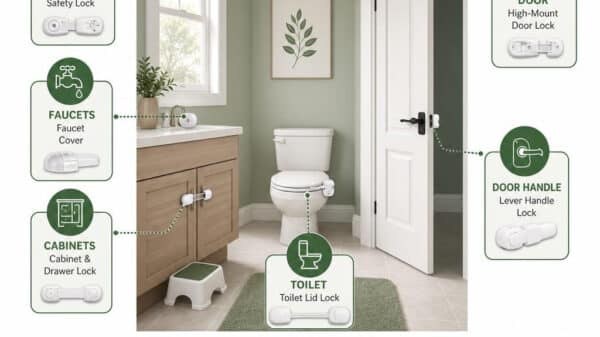
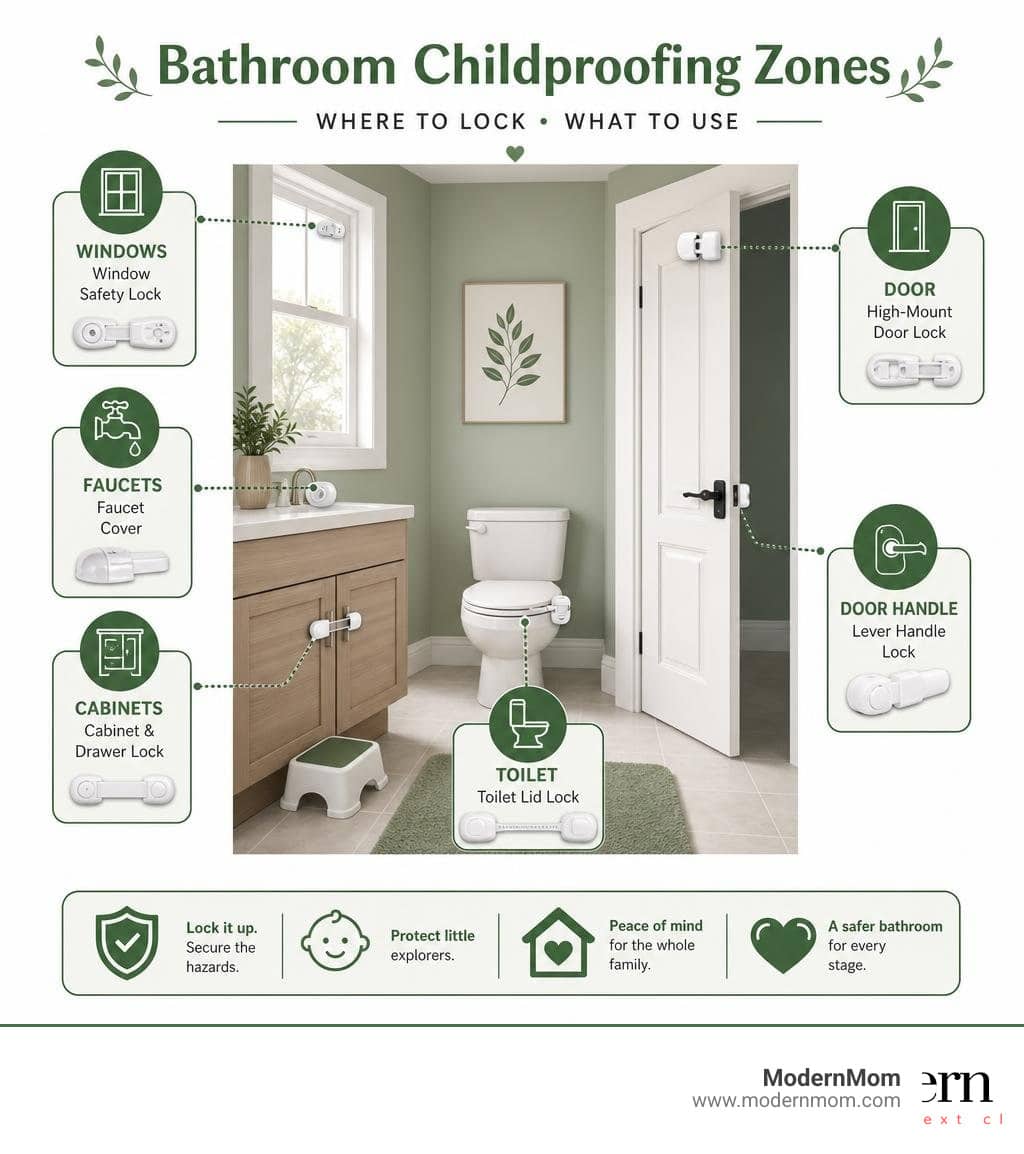
Here’s a quick look at the most important toddler bathroom safety locks to know about:
Toilets aren’t the only worry. Bathroom cabinets often hold cleaning chemicals, medicines, and razors. Hot faucets can scald in seconds. And a toddler who locks themselves inside is a scary situation no parent wants to face.
The good news? The right locks make a real difference — and most install in minutes with no tools required.
Why Toddler Bathroom Safety Locks Are a Must-Have
As moms, we quickly learn that curiosity knows no bounds. To a little explorer aged 1 to 3, the bathroom isn’t just a utility room — it’s an indoor water park and treasure chest combined.
Unfortunately, this curiosity comes with serious risks. Pediatricians and safety experts warn that the bathroom is one of the most dangerous areas in any home.
First and foremost is the risk of drowning. Because toddlers are top-heavy, they can easily lose their balance and fall head-first into an open toilet bowl. It only takes a tiny amount of water and a few unsupervised moments for a tragedy to occur.

Beyond water safety, there’s the inevitable plumbing nightmare. Toddlers love to watch things swirl down the drain. If left to their own devices, they’ll happily flush toys, keys, entire rolls of toilet paper, or even half-eaten snacks down the toilet.
We also have to think about what’s stored under the sink. Bathroom cabinets are the default home for cleaning chemicals, laundry detergents, medicines, and sharp objects like razors. Installing safety latches keeps these dangerous items completely out of reach.
While you are working on childproofing, you can also use this time to teach healthy boundaries. If you are looking for positive ways to introduce your little one to the bathroom environment, check out our guide on Activities for Teaching Toddlers Personal Hygiene.
Comparing the Best Toilet Lid Locks
When it comes to securing the toilet itself, you generally have two choices: flexible multi-purpose strap locks or dedicated rigid arm locks.
Strap locks are versatile and can be used on cabinets or trash cans too. However, dedicated lid locks are specifically engineered to withstand the unique forces of a toddler pulling upward on a toilet seat.
Before you buy, check the shape of your toilet. Many modern adhesive locks require a completely flat toilet lid to stick properly. If your toilet lid has a decorative curved lip on the back, the adhesive base won’t make full contact, and the lock will fail.
It is also smart to look for locks with a temporary deactivation mode. This allows you to disable the locking mechanism when hosting adult guests so they don’t get accidentally locked out of the toilet!
Safety 1st Outsmart: A Clever Decoy Toddler Bathroom Safety Lock
If you have a clever little “ninja toddler” who loves to figure out how things work, the Safety 1st Outsmart Toilet Lock is a brilliant choice.
This lock features a prominent, enticing decoy button. Your toddler will happily push this button over and over, completely unaware that the actual release buttons are hidden in plain sight on the sides. It’s highly effective at distracting curious minds.
It uses a durable nylon and plastic strap that fits securely across most toilet shapes. However, keep in mind that full bathrooms get very humid. Over time, heavy steam from your daily showers can weaken the adhesive backing.
To prevent this, make sure to clean the toilet surface with rubbing alcohol and let the adhesive cure for a full 24 hours before your toddler gets their hands on it.
Nuby Safety Toilet Lid Lock: A Reliable Toddler Bathroom Safety Lock
If you prefer a simpler, more direct design, the Nuby Safety Toilet Lid Lock is an excellent, budget-friendly alternative.
This lock features a rigid arm that keeps the lid firmly shut. It is designed for easy, one-handed operation by adults. You simply push and rotate the arm to open, and it clicks securely back into place when you close the lid.
Because it comes in a convenient two-pack, you can secure multiple bathrooms in your home at once. The heavy-duty adhesive provides a strong hold without requiring any tools or drilling. Best of all, it is designed to peel off cleanly without damaging your toilet’s porcelain finish when your child outgrows it.
Keeping Kids Out: Door, Cabinet, and Faucet Locks
Sometimes, the easiest way to childproof a bathroom is to prevent your toddler from entering it in the first place. Restricting access entirely gives you complete peace of mind.
If your bathroom doors have round doorknob handles, standard plastic knob covers work beautifully. However, many modern homes feature lever-style door handles. Toddlers quickly learn they can use their body weight to pull these levers down and open the door.
Don’t forget about the bathtub itself! Toddlers love to fiddle with the faucet handles, which can lead to accidental flooding or severe scald burns.
According to safety standards, you should lower your home’s water heater thermostat to 120°F (49°C) to prevent burns. You can also install anti-scald devices on your faucets.
A clever, free DIY hack is to simply unscrew your bathtub faucet handles entirely when they aren’t in use, leaving only the small inner nubs that are far too difficult for tiny fingers to turn.
Securing the bathroom door is a great first step to making your home feel like a safe haven. For more ideas on creating a peaceful, secure environment for your family, read our tips on 7 Ways to Make Your Kids Feel Safer.
HugLock: The Out-of-Reach Door Lock
If you want a door lock that your child cannot physically reach, let alone defeat, the HugLock is a total game-changer.
This innovative lock slides directly onto the side of any standard interior door. Because you can place it at any height, you can install it way up high, completely out of your toddler’s sight and reach.
It requires absolutely no tools, screws, or sticky adhesives, making it perfect for renters who want to protect their security deposits. It operates smoothly from both sides of the door so adults never get trapped inside, and it features a handy disable switch for when the kids are asleep or away.
Note: The HugLock is designed strictly for standard interior doors and is not compatible with thicker exterior or garage doors.
Regalo Home Safety Lever Door Lock
If your home features lever-style handles, the Jool Baby Door Lever Lock is a highly reliable solution.
This lock uses a strong adhesive to mount directly behind your existing lever handle. It blocks the handle from being pulled downward, effectively stopping toddlers in their tracks.
To unlock it, adults simply use a quick two-action release. To re-engage the lock, it requires a three-action motion, ensuring it remains completely childproof. It is made of durable, high-quality plastic and has a sleek, neutral white design that blends seamlessly into modern home decor.
Safety 1st Secure-to-Explore Adhesive Locks
Once a toddler does get inside the bathroom, their next target is usually the cabinets. The Safety 1st Secure-to-Explore Adhesive Locks are perfect for keeping those low-lying drawers and cupboards securely shut.
These patent-pending locks are designed to be twice as strong as standard adhesive locks on the market. They install entirely inside your cabinets using a clever alignment template, so they remain completely hidden from the outside.
They feature a convenient “unlock mode” that lets you temporarily disable the lock. This is incredibly helpful for grandparents who only need childproofing when the grandbabies are visiting, or for busy prep times when you need constant access to your cabinets.
Frequently Asked Questions About Bathroom Childproofing
Are toilet locks really necessary for every home?
It often depends on your child’s personality. Some toddlers are natural “toilet dabblers” who are endlessly fascinated by water, while others show no interest at all. However, because drowning can happen in a matter of seconds, most safety experts highly recommend installing a toilet lock as a preventive measure rather than taking a “wait-and-see” approach.
Will adhesive locks damage my toilet or bathroom cabinets?
Most modern childproofing brands use high-quality adhesives (like 3M or VHB tape) that are designed to hold fast but peel away cleanly. To remove them safely without damaging paint or porcelain, simply warm the adhesive with a hairdryer for a few minutes to soften the glue, then gently pry it off using dental floss or a plastic scraper.
How do I childproof a bathroom if I have older children?
This is a common struggle for moms! Older kids (ages 5 and up) need to use the bathroom independently and can easily get frustrated by complex toilet locks. In these cases, using a high-mounted door lock like the HugLock is often the best compromise. You can keep the door locked when the toddler is roaming, but teach your older children how to slide the lock open when they need to go.
Conclusion
At the end of the day, our goal as moms is to create a safe, happy home where our children can grow and explore without constant worry. While toddler bathroom safety locks are incredibly helpful tools, no physical lock can ever replace active, loving adult supervision.
By combining reliable physical barriers with consistent boundaries, you can keep your curious little explorer safe and sound. For more expert advice on keeping your little ones secure during every stage of development, check out our guide on baby sleep safety.