



















The Essential Guide to Using Visual Schedules and Daily Routines for Children
Implementing a daily routine for kids is more than just a productivity hack for parents; it is a fundamental pillar for creating a peaceful home environment. When children know what to expect, the frequency of meltdowns decreases, and mornings transition from chaotic races into manageable rhythms.
Most families experience the same frustrations: the struggle to get out the door on time or the nightly battle over bedtime. By establishing a consistent structure, you provide your children with the framework they need to thrive. An effective daily schedule typically anchors around these core transitions:
- Morning Wake-up: A gentle, consistent start to the day.
- Personal Care: Time dedicated to dressing and hygiene.
- Nutritional Foundations: Pre-planned meals to reduce decision fatigue.
- The Departure: Organizing school supplies and footwear at a designated “launch station.”
- Afternoon Re-entry: Transitioning from school to home with snacks and downtime.
- Evening Connection: Shared meals and family engagement.
- Sleep Hygiene: A calming sequence of books and baths to prepare for rest.
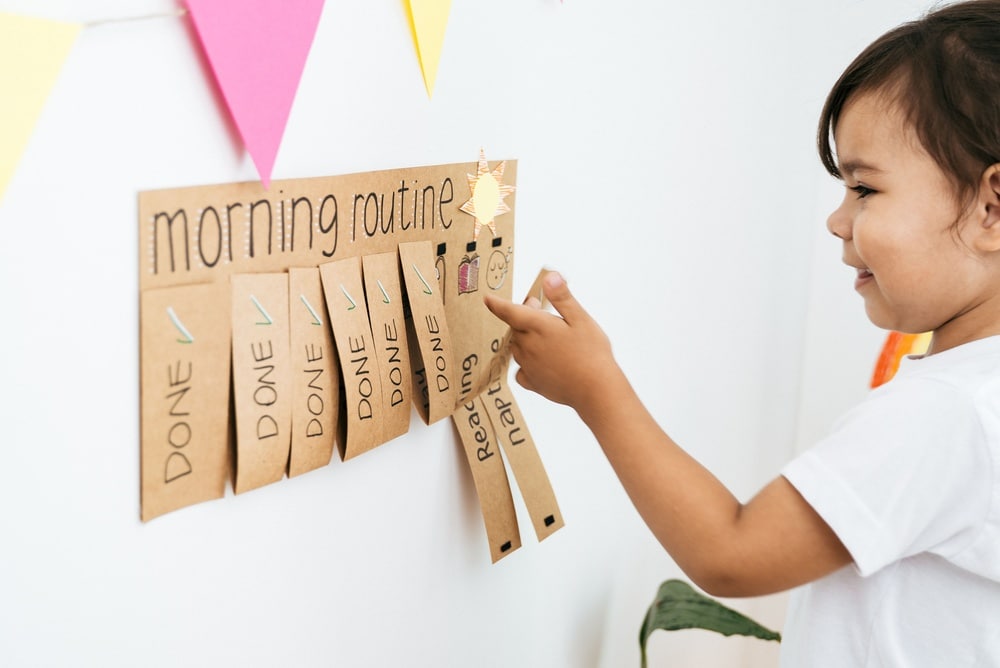
Scientific insights suggest that children raised in structured environments often find it easier to adapt to social and academic settings. Predictability fosters a sense of internal safety and self-assurance. Using visual schedules—charts that display the day’s events through icons or simple text—empowers children to manage their own tasks, shifting the “boss” role from the parent to the schedule itself.
How Predictable Daily Structures Support Your Child’s Development
Children naturally seek repetition. While it may seem monotonous to an adult, a toddler requesting the same story nightly is searching for stability in a world they are still learning to understand. A consistent routine for kids acts as an emotional safety net, allowing them to feel secure enough to explore their independence.
The psychological benefits of structure are significant. When life is predictable, children experience lower levels of stress and anxiety. Knowing exactly what follows “dinner” or “bath time” removes the fear of the unknown, which is a frequent trigger for behavioral issues. This stability is particularly helpful during periods of societal stress or major family transitions, helping children maintain emotional regulation.
Furthermore, routines are a quiet engine for academic success. When children don’t have to worry about when they will eat or play, they can dedicate more mental energy to learning and socializing. These early structures also introduce foundational time-management and responsibility skills, such as learning to organize belongings or follow a sequence of steps.
Perhaps most importantly, mastery of a routine builds a child’s confidence. Successfully completing a morning checklist without a reminder provides a sense of autonomy. This reduces power struggles, as the parent becomes a guide rather than a drill sergeant.
Streamlining the Morning Rush for Preschoolers and Elementary Students
For children between the ages of 3 and 8, mornings can be particularly high-energy. Children in this developmental stage often crave connection after a night of sleep. Taking just a few minutes to snuggle or talk before starting the “to-do” list can lower resistance and make the rest of the morning go more smoothly.
A generous timeframe—ideally 45 to 60 minutes—is recommended for this age group. Providing this “buffer” allows children the time they need to practice dressing themselves or packing their bags without the pressure of a ticking clock. If we rush young children, we often end up doing tasks for them, which misses the opportunity for them to learn vital self-sufficiency skills.
Designating a specific area near the exit for backpacks and shoes—a “launch station”—prevents the last-minute search for missing items. Matching your expectations to your child’s specific temperament is key to making these systems work long-term.
Practical Tools to Encourage Morning Independence
Transforming your morning from a sprint into a flow is easier with the right tools:
- Visual Checklists: Use image-based charts for toddlers and a mix of words and pictures for older children. This allows them to track their own progress.
- Timer Systems: Visual timers or sand glasses turn tasks into a gentle game, helping children visualize how much time they have left.
- Morning Soundscapes: Use music to signal transitions—upbeat tracks for getting dressed and calmer melodies for breakfast.
- Advance Preparation: Preparing breakfast items or setting the table the night before reduces early-morning stress.
- Hygiene Organization: Keep all morning essentials in one accessible basket to prevent children from getting distracted while searching for tools.
Adjusting Routines to Meet the Evolving Needs of Growing Children
As children mature, their needs for supervision decrease while their need for autonomy increases. A routine for kids should evolve over time to reflect these developmental changes.
Toddlers (ages 1–3) require a very rhythmic, play-based day. They typically move to a single nap by 18 months and thrive on a schedule heavy on bonding and sensory exploration. For teenagers, the focus shifts toward self-regulation. While they require more independence, they still benefit from “anchor points” like shared family meals and clear boundaries regarding technology use in the evenings.
| Category | Toddlers (1-3) | School-Age (6-12) | Teens (13-18) |
|---|---|---|---|
| Wake Time | 6:30 – 8:00 AM | 7:00 – 7:30 AM | 6:30 – 7:30 AM |
| Core Focus | Sensory Play | Skills & Chores | Self-Direction |
| Downtime | 1-2 Hour Nap | Quiet Reading | Social/Rest |
| Digital Limits | Very Limited | Supervised Hour | Agreed Boundaries |
| Bedtime | 6:30 – 7:30 PM | 8:00 – 9:00 PM | 9:30 – 10:30 PM |
Age-Appropriate Daily Flow Examples
The Toddler Schedule:
- 7:30 AM: Gentle wake-up and connection time.
- 8:00 AM: Breakfast and age-appropriate chores, like wiping the high chair.
- 9:30 AM: Physical activity or outdoor time.
- 12:00 PM: Lunch followed by a restorative nap.
- 3:00 PM: Snack and unstructured play.
- 5:30 PM: Family mealtime.
- 6:30 PM: Evening wind-down sequence.
The Elementary School Rhythm:
- 7:00 AM: Wake-up and independent use of the routine chart.
- 8:00 AM: School departure.
- 3:30 PM: Nutritious snack and “brain break” period.
- 4:00 PM: Dedicated time for homework and house responsibilities.
- 5:00 PM: Active play or hobbies.
- 6:30 PM: Shared dinner and conversation.
- 8:00 PM: Screen-free bedtime preparation.
The Adolescent Approach:
Teens thrive on “flexible structure.” Focus on essential deadlines and obligations while allowing them to choose how they manage their free time. Encourage them to prepare for the following day each evening to minimize morning friction. For holidays or summer breaks, help them maintain a list of productive activities to prevent boredom.
Supporting Neurodivergent Children and Eliminating Daily Friction
For kids with ADHD, Autism, or sensory needs, a daily routine is an essential tool for navigating the day. These children often find transitions difficult and may struggle with executive functioning skills.
A powerful strategy to use is backward chaining. This involves a parent assisting with every step of a process except the very last one. By completing the final step themselves, the child experiences the immediate satisfaction of finishing a task, which builds confidence and encourages them to take on more steps over time.
Visual aids and timers are especially helpful here, as they make the abstract concept of time more concrete. If a significant change to the routine is coming, discuss it well in advance to allow for mental preparation.
To minimize power struggles with any child, offer “limited choices.” Instead of giving an open-ended command, ask, “Would you like to wear the blue socks or the green ones?” This grants the child a sense of agency while ensuring the necessary task is still completed.
Navigating Obstacles and Avoiding Common Parenting Pitfalls
A routine should serve as a helpful guide, not a rigid set of rules. Life is unpredictable—illness, traffic, or unexpected events will occur. Aim for the 80/20 Rule: if you stick to the plan 80% of the time, your family will still benefit from the structure even when life gets messy.
One major hurdle to a successful routine is digital distraction. Allowing screens during the morning can lead to lethargy and resistance when it’s time to turn them off. Additionally, blue light from devices can significantly disrupt melatonin production in children, making it harder for them to settle at night. Keeping bedrooms screen-free promotes better sleep and a more refreshed start the next day.
How can I manage routine resistance?
If a child pushes back, it usually stems from a need for connection or the task feeling overwhelming.
- Prioritize Connection: Spend a few moments of quality time with your child before asking them to perform a task.
- Natural Consequences: Sometimes, letting a child experience the result of their choice (like going to school in pajamas) is a more effective teacher than a verbal argument.
- Consistency is Key: It usually takes several days of consistent application for a new routine to stick. Stay the course even if the first few days are difficult.
How do I begin a new routine?
Avoid trying to change everything at once.
- Focus on One Area: Start with the most difficult part of your day, such as bedtime.
- Collaborate: Ask your children for their input on how to make the schedule better. They are more likely to cooperate when they feel involved in the process.
- Keep it Visible: A simple chart on the refrigerator can serve as a constant, neutral reminder for everyone.
Is it okay to change routines on weekends?
While weekends can be more relaxed, keeping the general order of events the same helps. Maintaining the same basic sequence for meals and sleep helps prevent a difficult transition when Monday morning arrives.
Final Thoughts on Building a Balanced Home Life Through Routine
Ultimately, a consistent routine for kids is about creating an environment where every family member feels supported. By providing a predictable rhythm and using visual aids, you reduce the daily friction and make more room for meaningful connection. Consistency is a long-term investment in your child’s emotional health and your own peace of mind. Start small, stay patient, and remember that a structured home provides the foundation for a happy, thriving family.